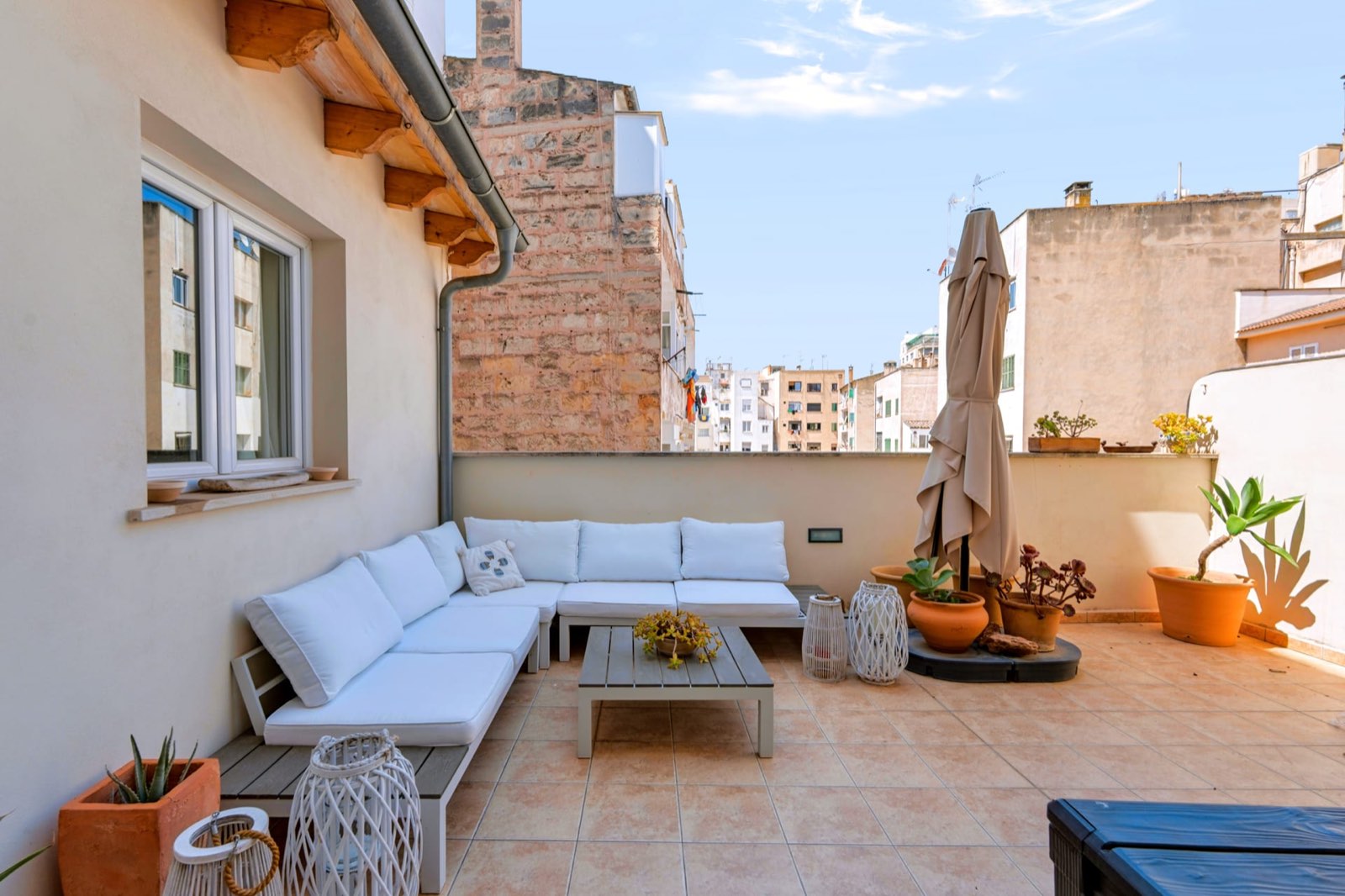
From October to May, Mallorca shows its second face: empty beaches, 18 degrees in January, cafés without queues. That is when the island is at its best to live on, and at its cheapest to rent on. Here is how wintering works, practically and without the postcard filter.
Why winter is the best time to rent
In summer you compete with tourism for every home. In winter the market flips: many move-in-ready homes that are used differently in summer look for one good tenant from October to May. For owners that means predictable income in the quiet months; for you as a tenant it means more choice, better prices, longer stays. The 1-to-10-month seasonal rental fits this window exactly.
What does a winter cost?
Prices vary a lot by area and standard, but as an honest guide for homes in the winter half-year:
| Home | typical winter rent per month |
|---|---|
| 1-bedroom apartment, Palma city | from about 1,100 € |
| 2-bedroom apartment, good area | 1,300 to 1,900 € |
| House or villa, southwest | from 2,500 € upwards |
Add utilities as agreed in the contract and the usual deposit of two months. Important: winter prices are for winter months. May to September is a different calculation.
The one thing everyone underestimates: heating
Mallorcan homes are built for summer. A January in an unheated old-town flat is colder than any weather app suggests. Check before you book:
- Heating, or air conditioning with a heating mode, in the living room and bedroom
- Orientation: south and southwest facing homes catch precious winter sun
- The utilities rule: heating electricity is the biggest winter cost, clarify flat rate or cap
- Double glazing is not a given on the island
Which areas work in winter
Palma city stays alive all year: restaurants, culture, doctors, everything open. Santa Catalina, the centre and Portixol are the safe choice for a first winter. The southwest (Illetas to Santa Ponsa) is quieter, sunny and popular with winterers; a car helps. Small coastal towns in the north and east get very quiet in winter, some feel completely closed. That can be exactly right, or very lonely.
The timeline
- August/September: search and enquire. The best winter homes go early.
- September/October: sign, a seasonal contract with a fixed end date.
- October to May: live. If you want to extend, talk to the owner early, six weeks before the end date at the latest.
The weather, honestly reckoned
A Mallorcan winter is mild, but it is not an extended summer. Daytime temperatures usually sit between 14 and 18 degrees, dropping to 6 to 10 at night. Frost is practically unknown on the coast and occasional at altitude in the Tramuntana.
The difference from summer is less the temperature than the humidity. October and November are the wettest months of the year; December and January often stay dry and clear for weeks. February brings the almond blossom and the first warm days.
What surprises many people: it feels colder indoors than out. Spanish houses are built for heat, not cold — thick walls, stone floors, often single glazing. At 16 degrees and sunshine you sit outside in a T-shirt and indoors in a jumper.
What you actually need in the fittings
Check the listing for three things, in this order:
Heating. Air conditioning with a heat pump is the usual solution in Mallorca and entirely adequate. Electric radiators work too but use considerably more. A fireplace is lovely but heats only the room it stands in.
Windows. Double glazing makes more difference than any heater. If the listing says nothing about it, ask — with older buildings in Palma's Old Town the question is especially worth asking.
Hot water. Electric instantaneous heaters are common and the largest item on the winter electricity bill. A gas or solar boiler is more comfortable.
A dehumidifier is the most underrated object of all. In the damp months it keeps mould off wardrobes and external walls, and it heats a little on the side. If there is none, one costs less at a DIY shop than a month of heating.
Daily life from November to March
What stays open depends heavily on the area. Palma, Inca, Manacor and the villages of the centre carry on as normal — doctors, schools, weekly markets, culture. In the coastal resorts most restaurants and hotels close.
For winterers that means: in Palma or Central Mallorca you notice little of winter beyond the weather. In the north and east you should look in the old towns rather than right on the water.
Flight schedules thin out too. Many direct routes run only two or three times a week from November to March instead of daily. If you plan to go home in between, factor that into your arrival and departure days.
What winter means formally
A winter let runs as a seasonal rental under Article 3.2 LAU — with everything that entails: a fixed end date, a deposit of two months' rent and no right of extension.
The reason for the stay is the most common doubtful case with wintering, because it is neither occupational nor medical. In practice it holds as long as your centre of life stays in your home country: main residence, registered address and tax residence there. What that means exactly is under the temporary purpose.
The second point is the length of stay. If you come several winters in a row, keep the 183-day line in view — it counts per calendar year, not per stay. More on that under NIE and registration.
How MUVAWAY helps
On the platform you find homes with clear monthly prices and availability, built for these stays. Request a viewing, receive the agreement and pay according to its signed schedule. The central model uses MUVAWAY's assigned Stripe links. Wintering is not an adventure sport, it is planning.